Pipe Stress Analysis

The Pipe Saddle (Wear Pad): The Sacrificial Shield

The Pipe Saddle (Wear Pad): The Sacrificial Shield

The Pipe Saddle (Wear Pad): The Sacrificial Shield

This entry is part 1 of 5 in the series Pipe Supports

Pipe Supports

The Engineering Art of Pre-Tensioning: Preparing for the Future Load

The Engineering Art of Pre-Tensioning: Preparing for the Future Load

Pipe-Shell-at-Moment-Support

Pipe Shell at Moment Support

The Constant Spring Hanger: Engineering Magic

The Constant Spring Hanger: Engineering Magic

The Variable Spring Base Support

The Variable Spring Base Support (Spring Can)

The Variable Spring Hanger: The Standard Solution

The Variable Spring Hanger: The Standard Solution

The U-Bolt: Deceptively Simple

The U-Bolt: Deceptively Simple

Post 5: The Clevis Hanger: The Workhorse of Suspension

Post 5: The Clevis Hanger: The Workhorse of Suspension

The Pipe Saddle (Wear Pad): The Sacrificial Shield

The Pipe Saddle (Wear Pad): The Sacrificial Shield

The Ultimate Guide to Pipe Supports: Beyond Gravity

The Ultimate Guide to Pipe Supports: Beyond Gravity

The Limit Stop: The Safety Bumper

The Limit Stop: The Safety Bumper

The Pipe Anchor: The Immovable Object

The Pipe Anchor: The Immovable Object

The Pipe Guide: Steering the Energy

The Pipe Guide: Steering the Energy

1.   Definition & Function Deep Dive

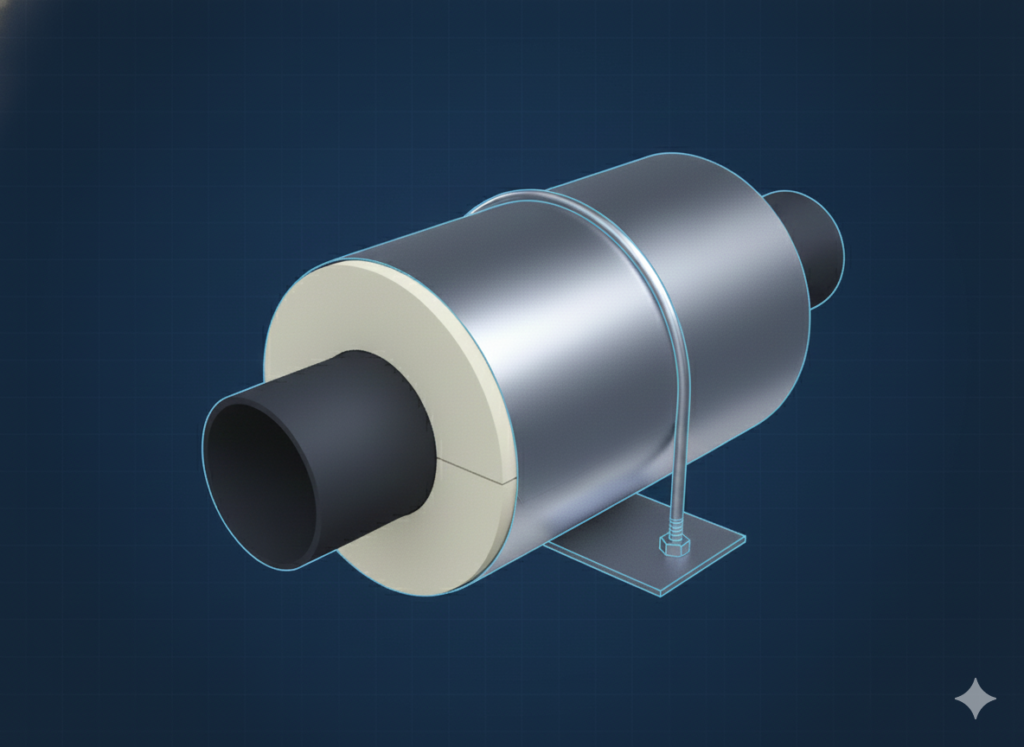
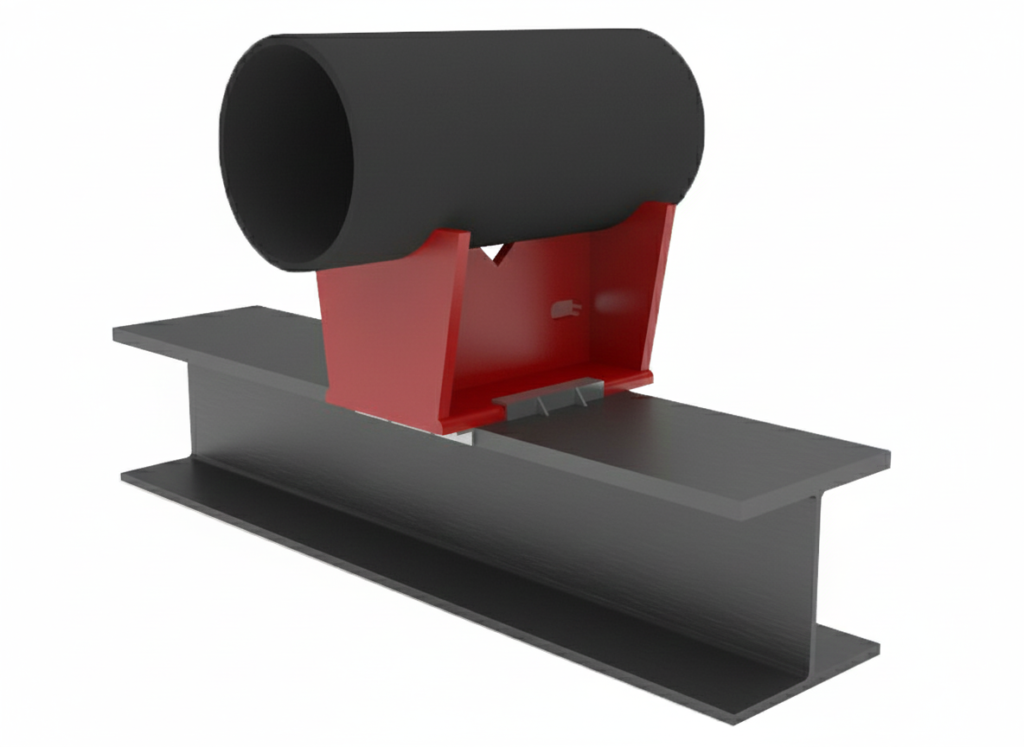
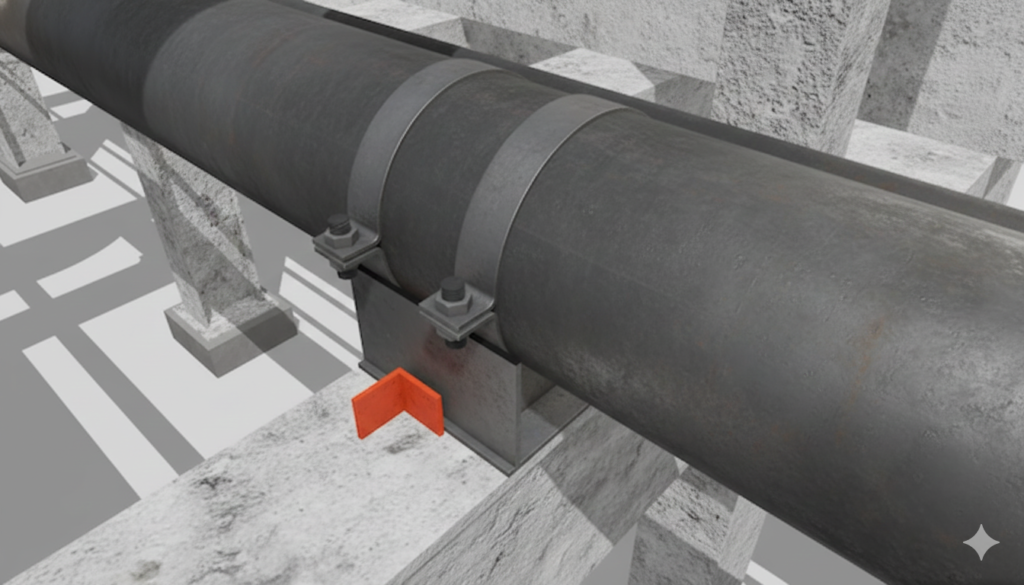
When a large, heavy pipe sits directly on concrete or steel, the point-loading stresses at the bottom of the pipe can be enormous. Furthermore, as the pipe expands and contracts, it rubs back and forth. A saddle is a sacrificial plate welded to the bottom of the pipe to take this abuse, protecting the pressure boundary of the actual pipe.

2.   Material & Fabrication Physics

  • Matching Material: The saddle must match the pipe metallurgy. Welding a carbon steel pad to a stainless-steel pipe creates a massive galvanic corrosion cell, eating away the stainless pipe rapidly.
  • Thickness: The pad is usually the same thickness or slightly thinner than the pipe wall itself.

3.   Installation & The “Weep Hole” Debate

A saddle is typically fillet welded all around its perimeter to seal it against moisture entry.

  • The Problem: During welding, the air trapped between the saddle and the pipe heats up and expands dramatically, potentially blowing out the final weld pass.
  • The Solution (The Weep Hole): Fabricators drill a small hole in the center of the pad to let this air escape during welding.
  • The Controversy: Some specifications require plugging this hole with grease or silicone after welding to keep water out. Others demand it be left open so any moisture that does get in can drain out. The “plug it” camp usually wins in offshore environments.
Pipe Supports

The Engineering Art of Pre-Tensioning: Preparing for the Future Load<< Pipe Shell at Moment Support<< The Constant Spring Hanger: Engineering Magic<< The Variable Spring Base Support (Spring Can)<< The Variable Spring Hanger: The Standard Solution<< The U-Bolt: Deceptively Simple<< Post 5: The Clevis Hanger: The Workhorse of Suspension The Ultimate Guide to Pipe Supports: Beyond Gravity

Leave your thought here

Your email address will not be published. Required fields are marked *

Select your currency
Select the fields to be shown. Others will be hidden. Drag and drop to rearrange the order.
  • Image
  • SKU
  • Rating
  • Price
  • Stock
  • Availability
  • Add to cart
  • Description
  • Content
  • Weight
  • Dimensions
  • Additional information
Click outside to hide the comparison bar
Compare