On Site: The Challenges of Piping Installation 4/7
Piping Construction

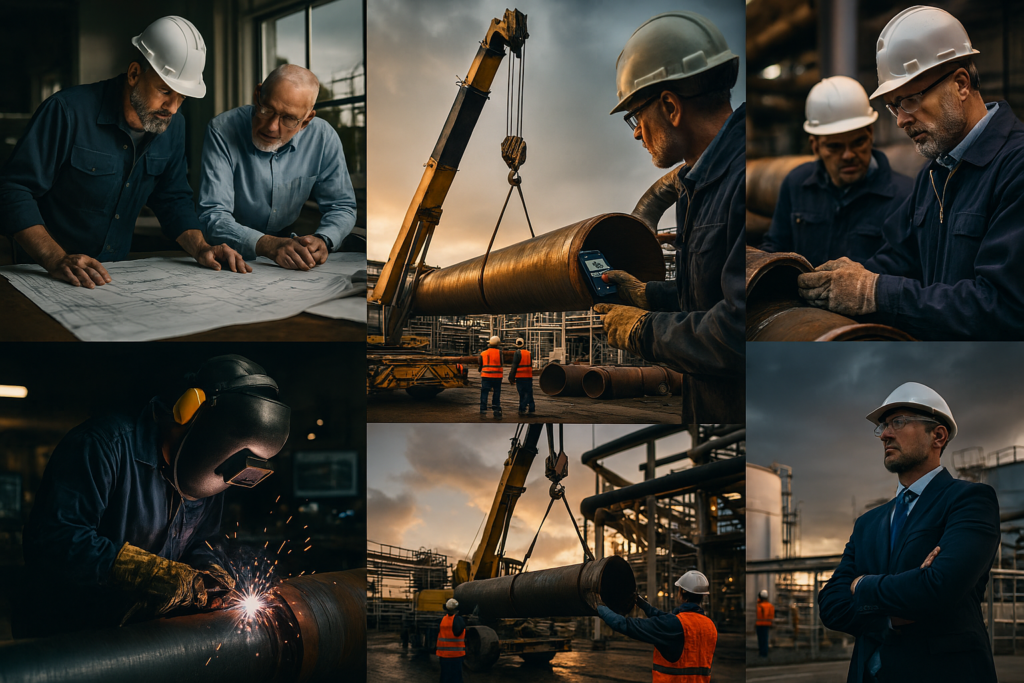
Introduction: Where Steel Meets Soil
The workshop may shape the spools, but the field is where they find their place. Installation is the most visible stage of piping construction — cranes swinging, welders crouching, inspectors watching. It’s also the most unforgiving.
On a petrochemical site in Suez, a rigging mishap nearly dropped a 12‑meter spool. The only thing that saved it was a last‑minute intervention by a rigger who noticed the sling angle was off. That moment underscored the truth: installation is choreography, and every misstep has consequences.
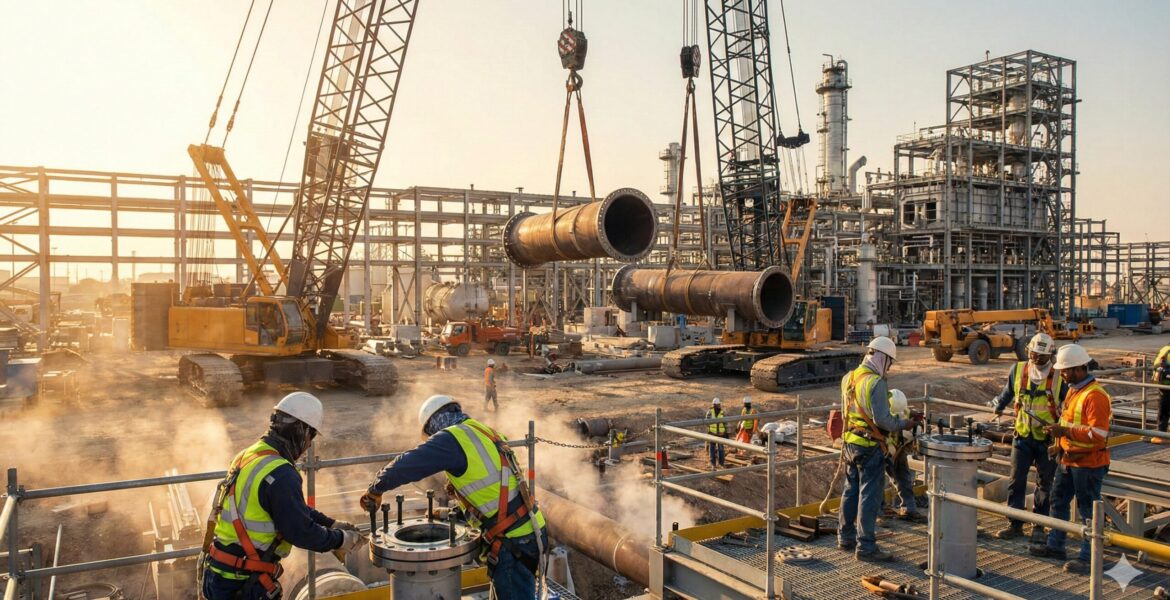
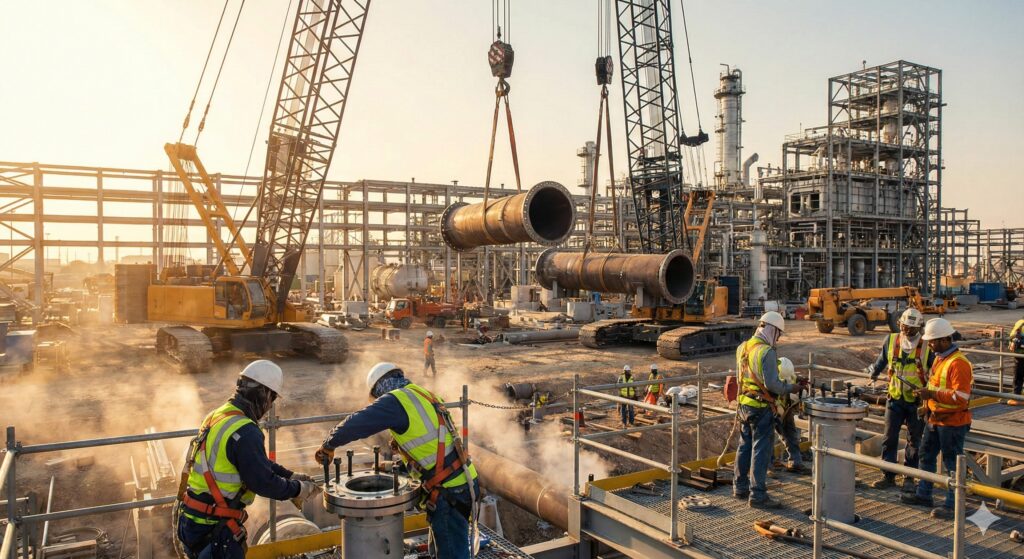
Rigging & Lifting Spools: Heavy Metal in Motion
Moving spools from laydown to position requires precision rigging.
- Standards: ASME B30 governs lifting practices, sling angles, and crane safety.
- Planning: Rigging plans must account for weight, center of gravity, and swing radius.
- Execution: Tag lines, spotters, and communication protocols prevent accidents.
Lesson learned: On a refinery project, a spool was lifted without considering wind load. A sudden gust swung it into a scaffold, damaging both. The repair cost three days.
Rigging essentials:
- Verify load charts for crane capacity.
- Inspect slings and shackles before use.
- Use tag lines to control swing.
- Keep exclusion zones clear of personnel.
Pipe Support Installation: Holding the System Together
Supports aren’t just steel brackets — they’re the backbone of stability.
- Types: rigid, spring, guides, anchors.
- Standards: API 610 provides guidance on vibration control and support spacing.
- Criticality: Misaligned supports can cause stress, vibration, and premature failure.
Case study: On a gas plant, a spring support was installed upside down. The line sagged under thermal expansion, cracking a weld. Correcting it required shutdown and rework.
Support checklist:
- Confirm support type per design.
- Align supports with isometric drawings.
- Verify load capacity and thermal movement.
- Inspect installation torque and anchor bolts.
Flange Management & Bolt Torquing: Sealing the System
Flanges are the gateways of piping systems — and leaks are their curse.
- Standards: ASME PCC‑1 defines bolting practices, torque values, and gasket seating.
- Methods: torque wrenches, hydraulic tensioners, cross‑pattern tightening.
- Risks: under‑torquing causes leaks; over‑torquing damages gaskets.
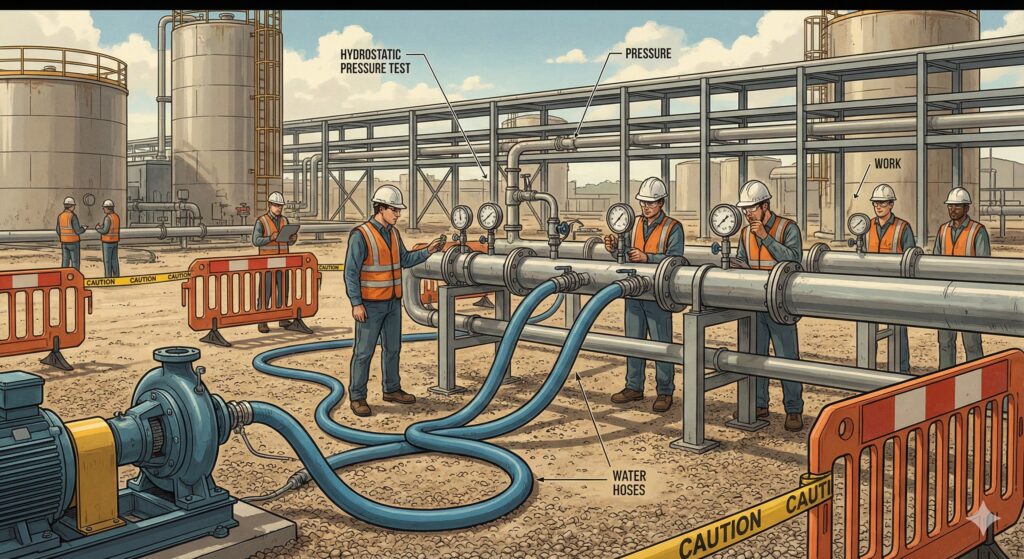
Real project lesson: On a chemical plant, a flange leaked during hydrotest. Investigation showed bolts tightened unevenly. Proper cross‑pattern torqueing would have prevented it.
Bolting protocol:
- Clean flange faces and gaskets before assembly.
- Lubricate bolts to reduce friction.
- Tighten in star pattern to distribute load.
- Record torque values for QC documentation.
Valve & Inline Instrument Installation: Precision in Flow Control
Valves and instruments are the nervous system of piping.
- Orientation: valves must be accessible for operation and maintenance.
- Calibration: instruments must be installed per ISO 9001 quality checks.
- Integration: inline instruments (flow meters, pressure transmitters) require correct positioning to avoid turbulence.
Anecdote: On a water treatment plant, a valve was installed backwards. The operator couldn’t access the handwheel during emergency shutdown. It was corrected, but the incident became a training story for years.
Installation tips:
- Confirm valve orientation with P&ID.
- Check instrument calibration certificates.
- Ensure accessibility for operators.
- Validate tie‑in points with existing systems.
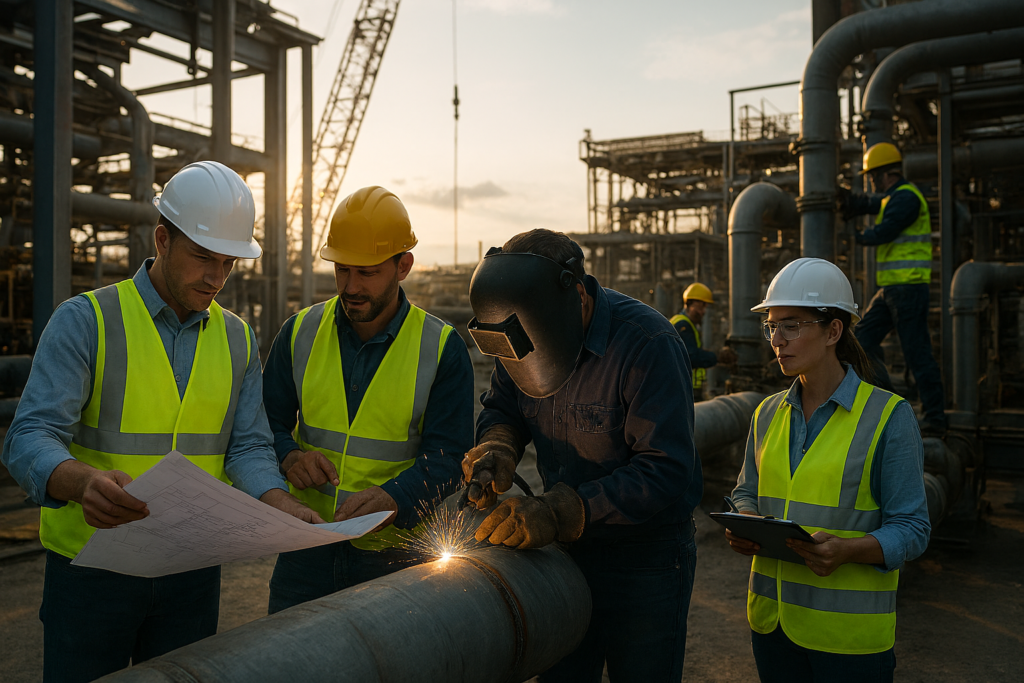
Field Welding & Tie‑ins: Closing the Loops
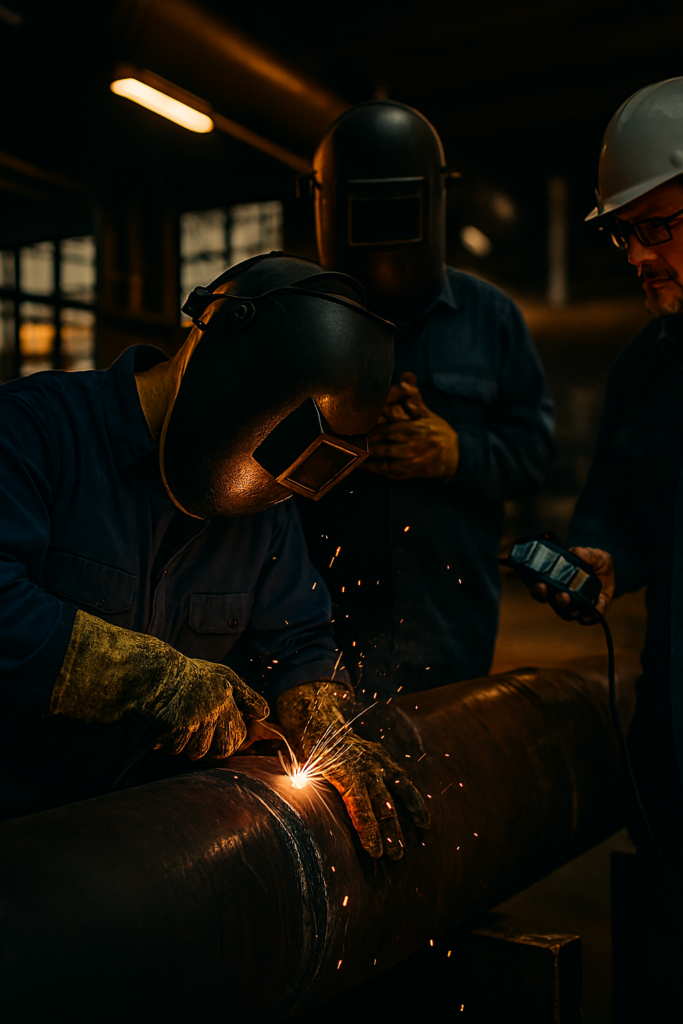
Field welding is the final stitch in the piping fabric.
- Challenges: confined spaces, weather, restricted access.
- Standards: ASME Section IX governs welder qualifications and WPS compliance.
- Tie‑ins: connecting new spools to live systems requires precision and safety.
Lesson learned: On a night shift tie‑in, welders completed a critical joint under tight schedule. The weld passed RT and became a symbol of teamwork.
Field welding essentials:
- Qualify welders for field positions.
- Use preheat and post‑weld heat treatment as required.
- Inspect tie‑ins with NDT before commissioning.
- Document weld maps for traceability.
The Human Side of Installation
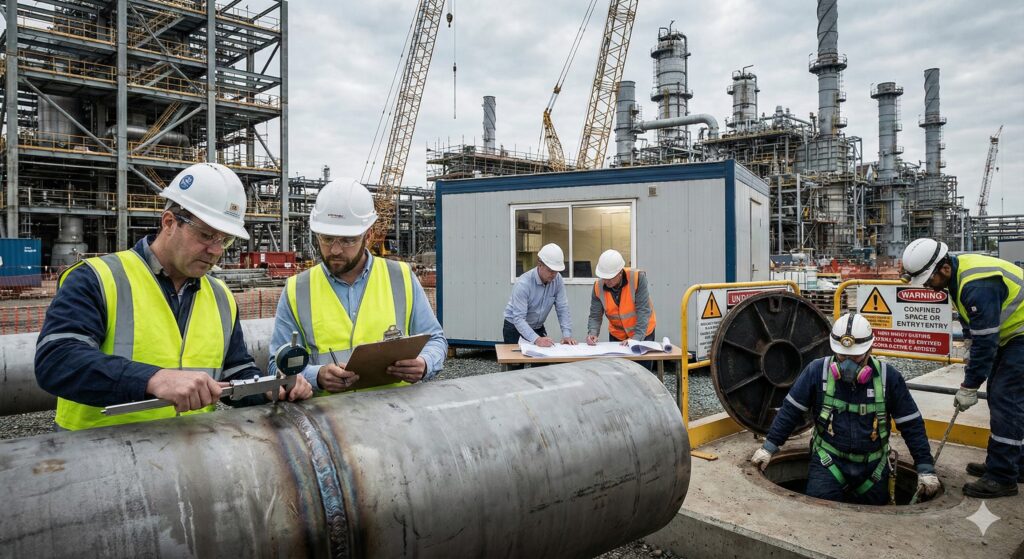
Installation is teamwork in motion. Riggers, welders, inspectors, and engineers — each plays a role.
On one site, a foreman said, “We don’t install pipes. We install trust.” That’s the essence of field work: every bolt tightened, every weld laid, every valve aligned is a promise kept.
Conclusion: Installation as the Bridge Between Fabrication and Testing
Field installation is the bridge between shop precision and system integrity. Done right, it makes testing and commissioning seamless. Done wrong, it echoes in leaks, misalignments, and delays.
It’s the stage where engineering meets reality — and where discipline meets courage.
👉 Next Post: Testing & Commissioning
![[A human lead engineer in a high-tech construction command center directing a team of digital AI agents in 2026]](https://learning.malyomar.com/wp-content/uploads/2026/01/collaborative-ai-construction-leadership-240x142.png)