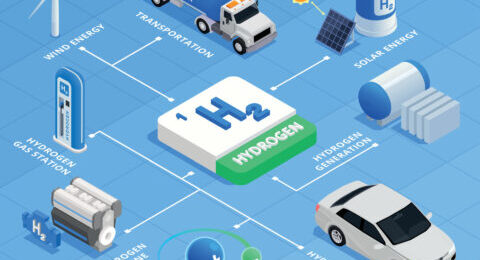
Hydrogen H2 Supply Chain
Hydrogen… Why?
Many experts and policymakers regard hydrogen as a promising energy carrier for decarbonizing road transport. Furthermore, hydrogen helps mitigate harmful gas emissions and enhances energy security. Consequently, the hydrogen economy has attracted increasing global attention.
Various governments have now published technology roadmaps for the hydrogen economy. These documents enable scientists and engineers to monitor the scheduled progress of hydrogen technologies closely. Because of this strategic planning, the industry is moving faster toward sustainable goals.
How to Make Hydrogen Energy
Industry experts utilize several methods to produce hydrogen. Currently, fossil fuels generate approximately 95 percent of the world’s hydrogen. Specifically, producers use steam methane reformation of natural gas or coal gasification.
The industry commonly refers to this as brown hydrogen. However, when producers capture and permanently store the carbon emissions—such as methane from steam reformation—they categorize the result as blue hydrogen. This transition is vital for reducing the carbon footprint of industrial energy.
What Is a Supply Chain?
A supply chain connects a company and its suppliers to distribute a specific product to the final buyer. Essentially, this network integrates various activities, people, entities, and resources. It also maps the essential steps required to transform a product from its original state. Finally, the chain ensures the service reaches the customer efficiently.
Understanding the Hydrogen (H2) Supply Chain
The industry defines the Hydrogen (H2) Supply Chain (HSC) as a system of activities connecting suppliers to customers. This system manages energy sources and executes various stages. These stages include the production, storage, transportation, and dispensation of hydrogen to refueling stations.
Infrastructure and Distribution Modes
Unlike most fuel infrastructures, operators can produce hydrogen through two main modes. First, they can use centralized modes, which mirror existing gasoline supply chains. Alternatively, they can use distributed modes.
In distributed systems, small-scale units produce H2 close to the point of use. Because these units operate at forecourt refueling stations, they significantly reduce distribution costs. Therefore, stakeholders must choose the mode that best fits their regional needs.
Key Questions for Decision Makers
Stakeholders function as economic, social, or institutional agents within a region’s hydrogen economy. To select the “best” hydrogen pathway, decision-makers must compare technological options against performance criteria. Ultimately, this allows them to plan infrastructure investments with confidence.
In that context, several critical questions arise:
-
How does the energy source used for H2 production impact the environment?
-
Which production option offers the most cost-effective results?
-
Does centralized production provide better savings than local, small-scale fueling?
-
Which transportation modes most efficiently connect demand with supply?
-
Does the well-to-wheel (WTW) cycle emit less CO2 than gasoline or diesel?
-
Which HSC configuration ensures the highest level of safety?
Modeling the Future of HSC
Researchers must identify the main characteristics of HSC activities to model them effectively. While general representations show the well-known options, maturity levels vary among these technologies. Consequently, we must emphasize that not all hydrogen solutions are ready for immediate large-scale deployment.