Guardians of Integrity: Quality Control & Safety in Piping Construction 6/7
Piping Construction

Introduction: The Final Gatekeepers
By the time a piping system reaches quality control and safety checks, thousands of hours of labor have already been invested. Yet, one overlooked defect or hazard can undo it all.
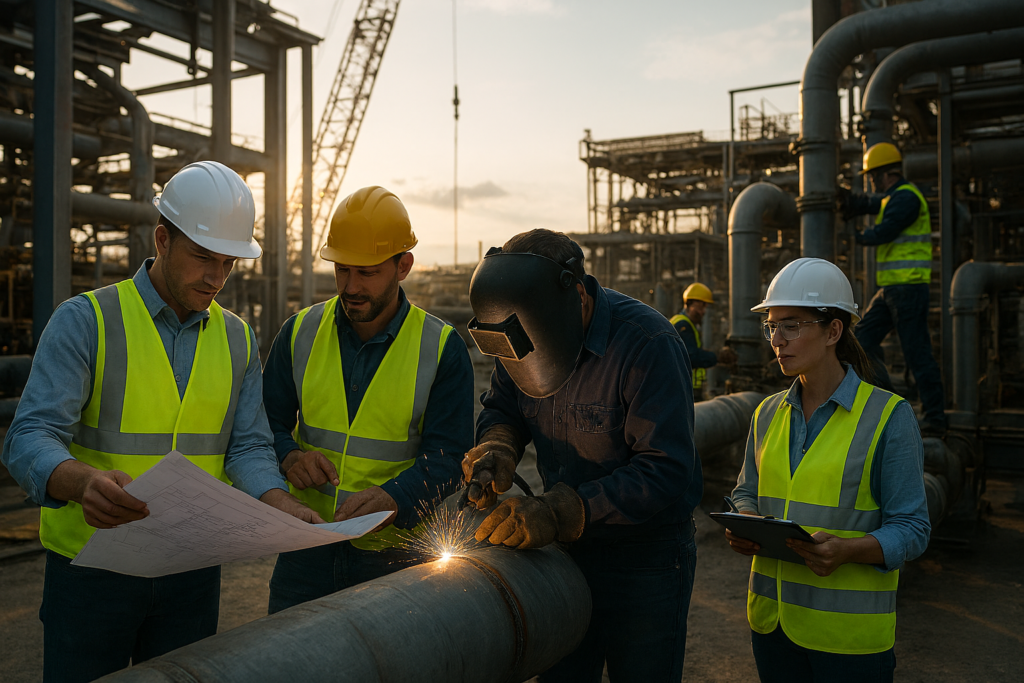
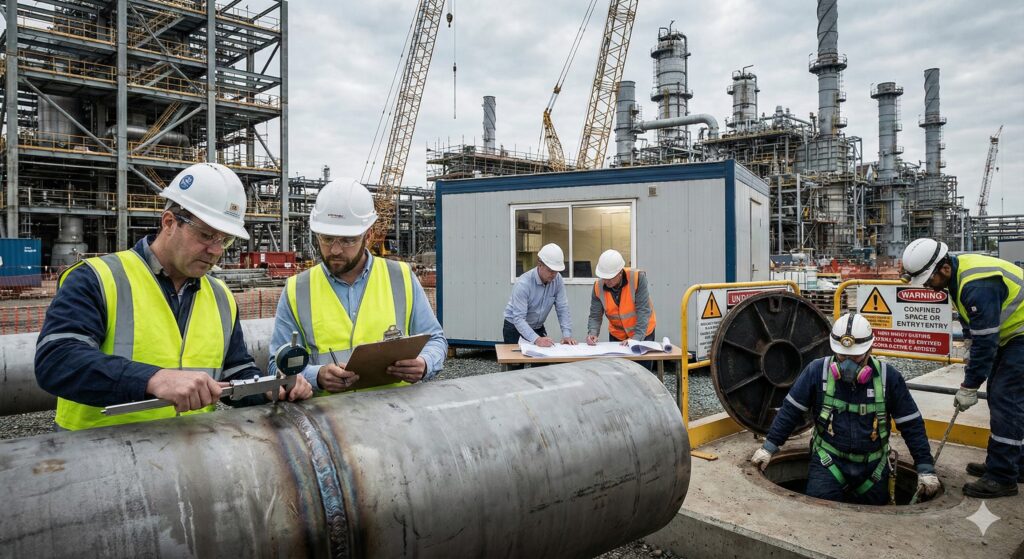
On a petrochemical site in Alexandria, a confined space incident nearly cost lives when a welder entered without proper gas monitoring. The rescue team intervened in time, but the lesson was clear: safety and quality are not afterthoughts — they are the guardians of integrity.
Weld Defects & Repair: Healing the Weak Points
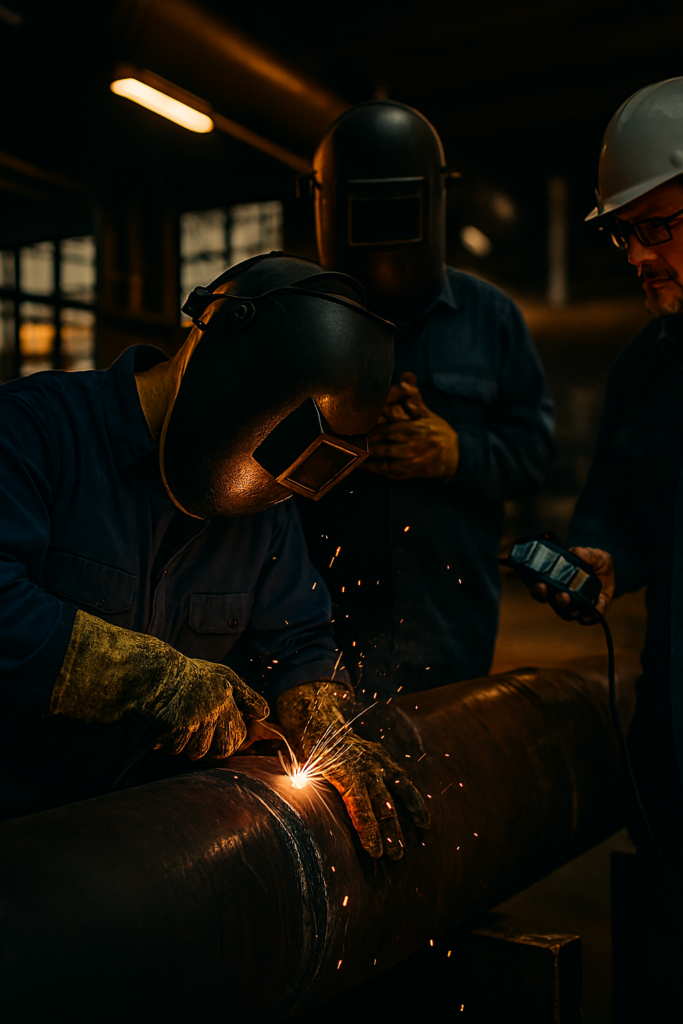
No weld is immune to defects. Porosity, cracks, lack of fusion, slag inclusions — each threatens system integrity.
- Standards: ASME Section IX defines repair procedures and welder requalification.
- Detection: NDT methods (RT, UT, PT, MT) reveal hidden flaws.
- Repair: Cut‑out, grind‑out, or overlay welding, followed by re‑inspection.
Real project lesson: On a fertilizer plant, RT revealed lack of fusion in a critical weld. The repair required cut‑out and re‑welding, but the documentation ensured traceability and client confidence.
Repair essentials:
- Document defect type and location.
- Assign qualified welders for repair.
- Re‑inspect with NDT before acceptance.
- Maintain weld repair logs for handover.
Dimensional Control: Precision Beyond the Eye
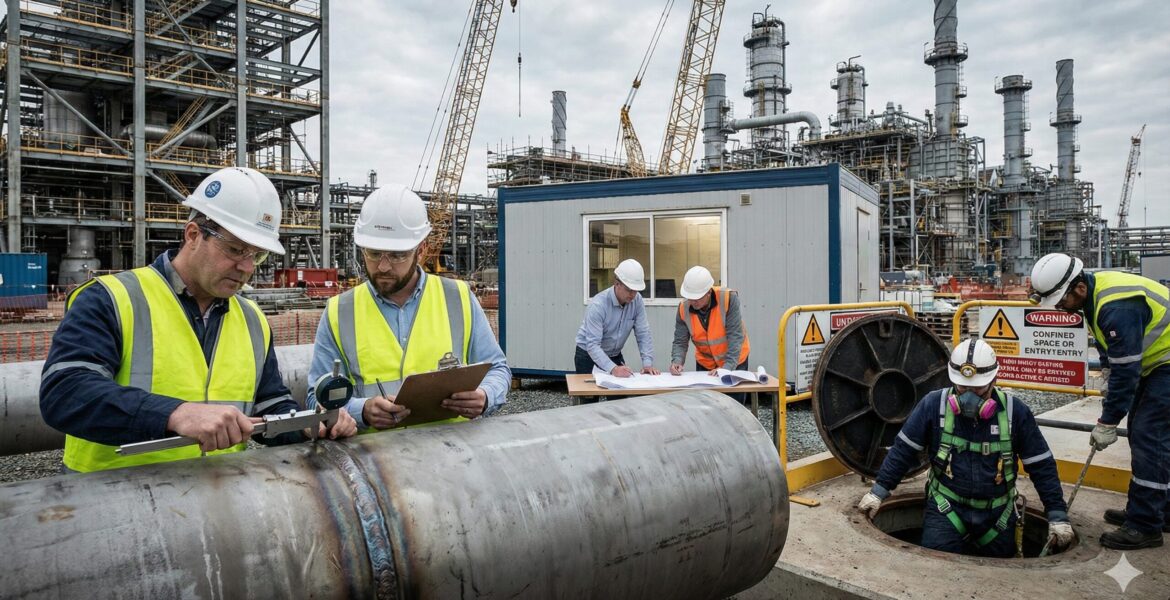
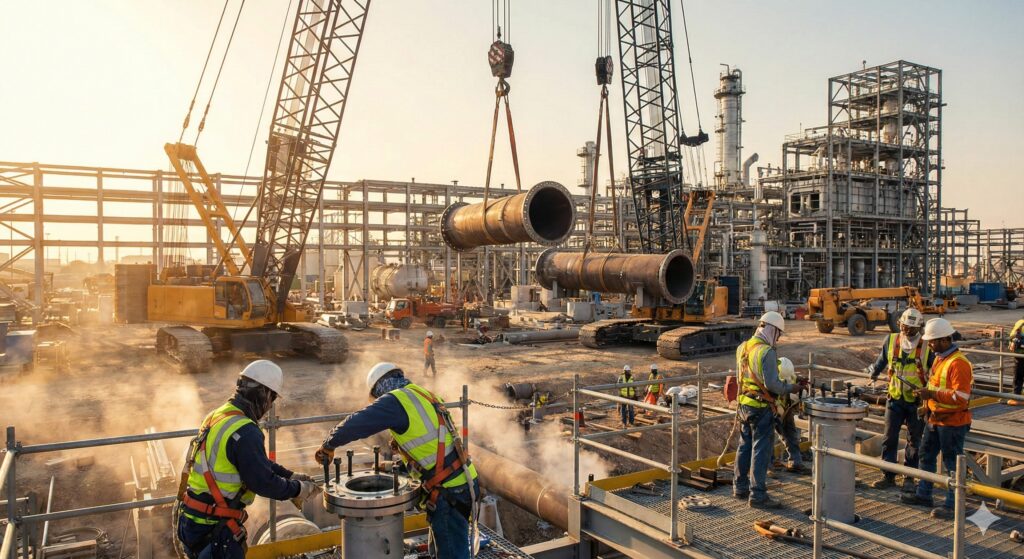
Dimensional control ensures that spools fit, flanges align, and supports carry loads.
- Tools: laser scanners, total stations, calipers, templates.
- Standards: ISO 9001 emphasizes dimensional accuracy in quality systems.
- Criticality: Misalignment can cause stress, vibration, and leaks.
Case study: On a gas plant, a 2‑degree misalignment in a 36” spool caused bolt hole mismatch. Correction required field rework and delayed commissioning. Dimensional control would have prevented it.
Checklist:
- Verify spool dimensions against isometrics.
- Check flange orientation and bolt hole alignment.
- Inspect support spacing and elevation.
- Record measurements in QC reports.
Safety Hazards: Hot Work & Confined Space
Safety is the invisible shield of construction.
- Hot Work: sparks, heat, and fire risks. Requires permits, fire watches, and extinguishers.
- Confined Space: oxygen deficiency, toxic gases, restricted access. Requires monitoring, ventilation, and rescue plans.
- Standards: OSHA and ISO 45001 define hazard management protocols.
Anecdote: On a refinery, a welder collapsed in a confined space due to low oxygen. The rescue team saved him, but the incident reinforced the need for continuous monitoring.
Safety essentials:
- Issue hot work permits with fire watch assigned.
- Monitor confined spaces with calibrated gas detectors.
- Train crews in rescue drills.
- Document safety audits and incident reports.
Documentation & Handover Packages: The Paper Trail of Trust
At project closeout, documentation is the proof of compliance.
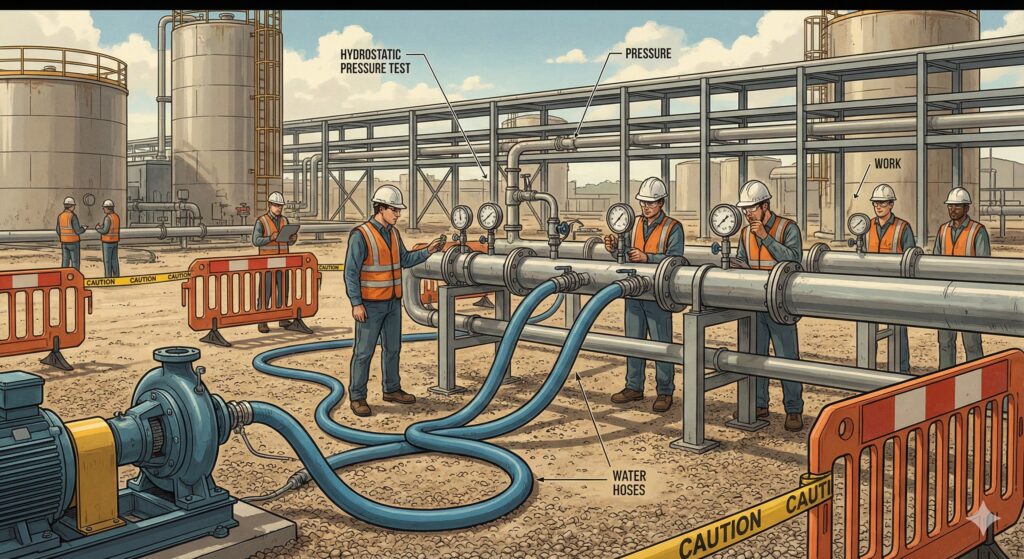
- Contents: weld maps, NDT reports, material certificates, safety records, test certificates.
- Standards: ISO 9001 requires documented evidence of quality.
- Importance: Clients rely on handover packages for operation and maintenance.
Lesson learned: On a chemical plant, missing NDT certificates delayed handover by two weeks. The welds were sound, but the paperwork wasn’t. Documentation is as critical as steel.
Handover checklist:
- Compile weld logs and repair records.
- Attach NDT and test certificates.
- Include safety audits and incident reports.
- Deliver digital and hard copies to client.
The Human Side of Quality & Safety
Inspectors often say, “We don’t just check welds. We check promises.” Safety officers echo, “We don’t just enforce rules. We protect lives.”
On one site, a safety manager carried a notebook of near‑misses. “Every entry is a life saved,” he said. That’s the human side of quality and safety — vigilance, responsibility, and care.
Conclusion: Quality & Safety as the Legacy of Construction
Quality control and safety are not the final steps — they are the legacy. They ensure that every spool, weld, and valve stands the test of time.
They are the guardians of integrity, the shield against failure, and the promise to future operators. 👉 Series Wrap‑Up: From Planning to Handover
![[A human lead engineer in a high-tech construction command center directing a team of digital AI agents in 2026]](https://learning.malyomar.com/wp-content/uploads/2026/01/collaborative-ai-construction-leadership-240x142.png)