Biomass & Bioenergy
Renewable Energy
Introduction
Wind and solar generate electricity, but they can’t easily fuel an airplane or provide high-grade industrial heat. Enter Bioenergy. By converting organic matter into fuel, biomass serves as a versatile, dispatchable renewable source—if managed sustainably.
Purpose: The Circular Energy Loop
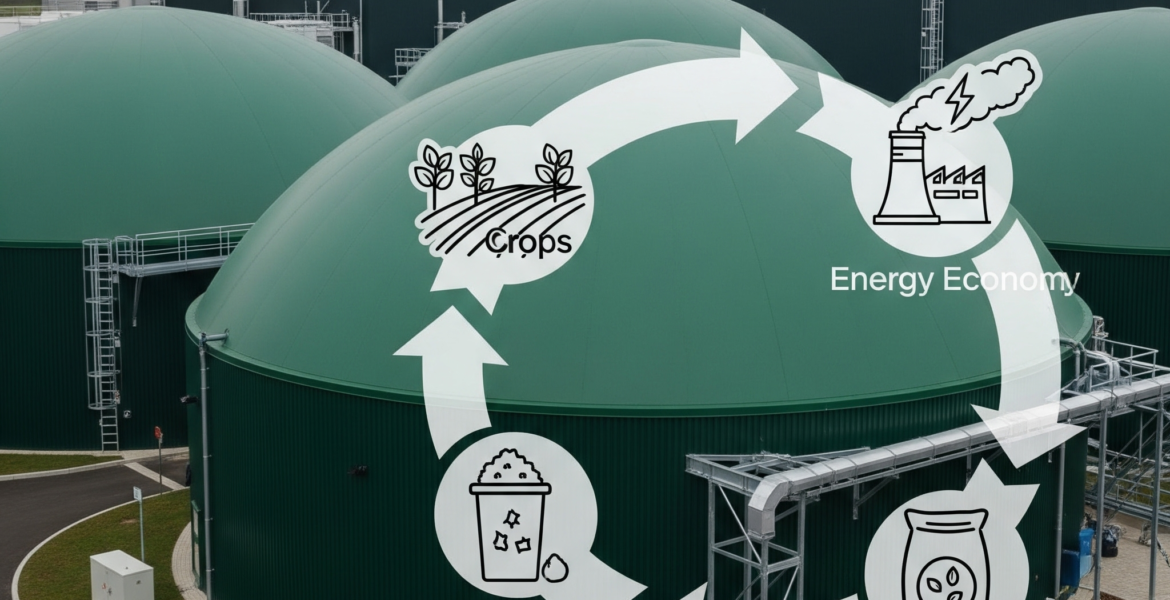
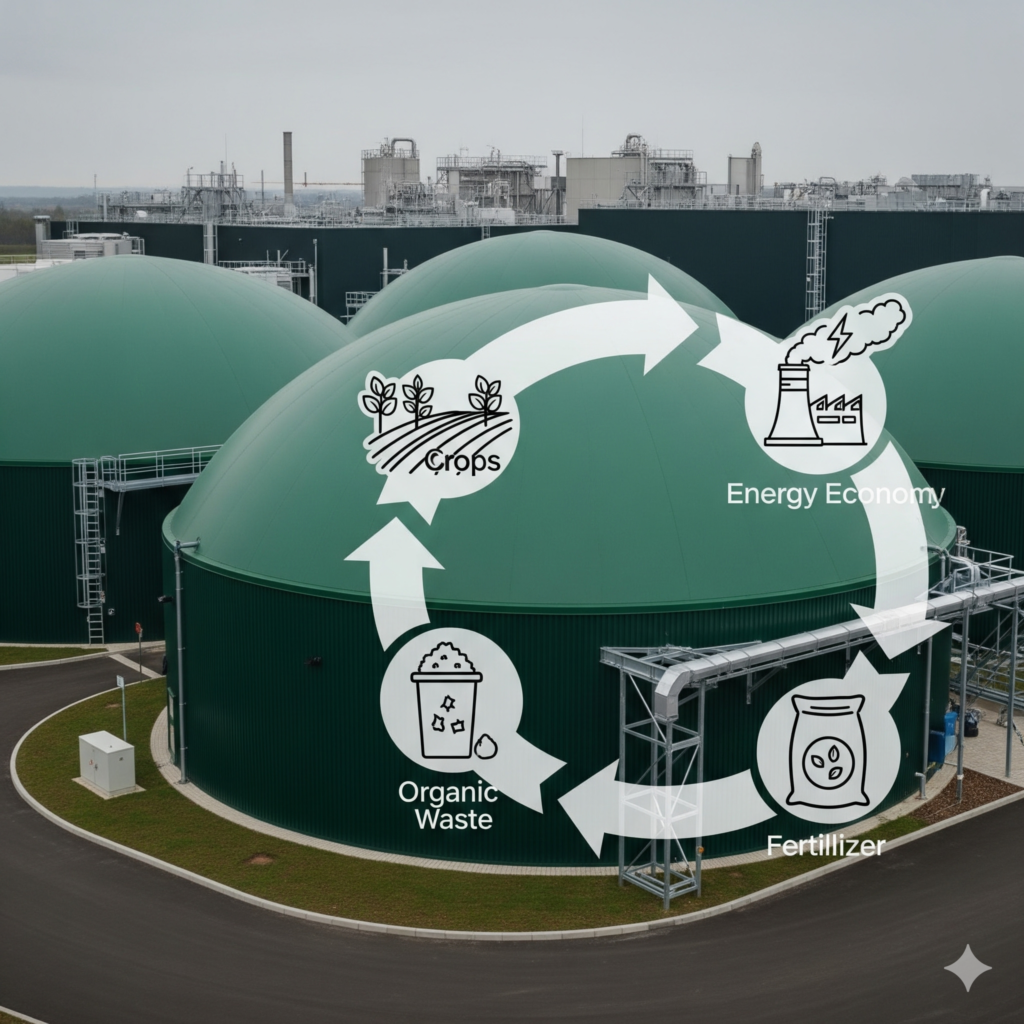
Biomass utilizes the carbon cycle. Plants absorb CO2; we use the plants for energy, releasing that CO2 back. Theoretically, this is carbon neutral.
- Waste-to-Energy: Solving two problems at once: waste management (landfill reduction) and energy generation.
Inputs: Feedstocks
- First Generation: Food crops (corn, sugarcane). Controversial due to “food vs. fuel” debate.
- Second Generation: Agricultural residues, wood chips, waste oils.
- Third Generation: Algae (high yield, no land competition).
Conversion Technologies
- Direct Combustion: Burning wood/waste for heat/steam (Rankine cycle).
- Anaerobic Digestion (AD): Bacteria break down organic waste in the absence of oxygen to produce Biogas (methane), which can be upgraded to Renewable Natural Gas (RNG).
- Gasification: Heating biomass with limited oxygen to produce “Syngas” (Hydrogen + Carbon Monoxide).
Process Steps: Assessing Viability
- Feedstock Security: The #1 failure reason for biomass plants is running out of consistent fuel. Long-term supply contracts are mandatory.
- Logistics: Biomass is low density. Transporting straw or chips over long distances burns more energy than the feedstock contains. Plants must be local to the source.
Pitfalls: The Carbon Debt
Burning a tree releases carbon instantly, but the new tree takes 50 years to grow back. This “carbon lag” is a major criticism. Sustainable forestry certification (like FSC) is crucial to ensure bioenergy is truly green.
Example: Biogas in Agriculture
Large dairy farms are covering manure lagoons with digesters. They capture the methane (which is 80x more potent than CO2 as a greenhouse gas) and use it to power the farm. The byproduct (digestate) is a high-quality, odorless fertilizer. A perfect circular economy example.