Renewable Energy in Developing Countries
Renewable Energy
Introduction: The Dual Challenge
The narrative of renewable energy in the West is often dominated by “Decarbonization”—reducing the emissions of existing high-consumption societies. However, for the Global South, the narrative is different. It is about “Energy Access.”
According to the UN, over 700 million people globally still lack access to electricity, and billions more rely on dirty biomass (wood, dung) for cooking. For these nations, the challenge is twofold: they must energize their growing economies to lift populations out of poverty, but they are being asked to do so without the cheap fossil fuels that developed nations used for centuries.
Part 10 of our series explores this unique dynamic. We look at how renewable energy is not a constraint on development, but a catalyst for it, enabling a technological “leapfrog” that bypasses the centralized grid entirely.
The Concept of “Leapfrogging”
In the early 2000s, huge swathes of Africa and Asia had no telephone landlines. Digging trenches and laying copper wire to every village was prohibitively expensive. Then, mobile technology arrived. Developing nations skipped (or “leapfrogged”) the landline era entirely and went straight to mobile.
We are now seeing the Energy Leapfrog. Instead of waiting decades for a national utility to build massive coal plants and run transmission lines to remote villages, communities are installing decentralized renewable systems today.
- Speed: A solar minigrid can be deployed in weeks; a centralized grid extension takes years.
- Cost: For remote populations, decentralized renewables are often cheaper than grid extension due to the high cost of transmission infrastructure.
Technologies of Access
The solutions in emerging markets are scaled differently than in the industrialized world.
1. Solar Home Systems (SHS)
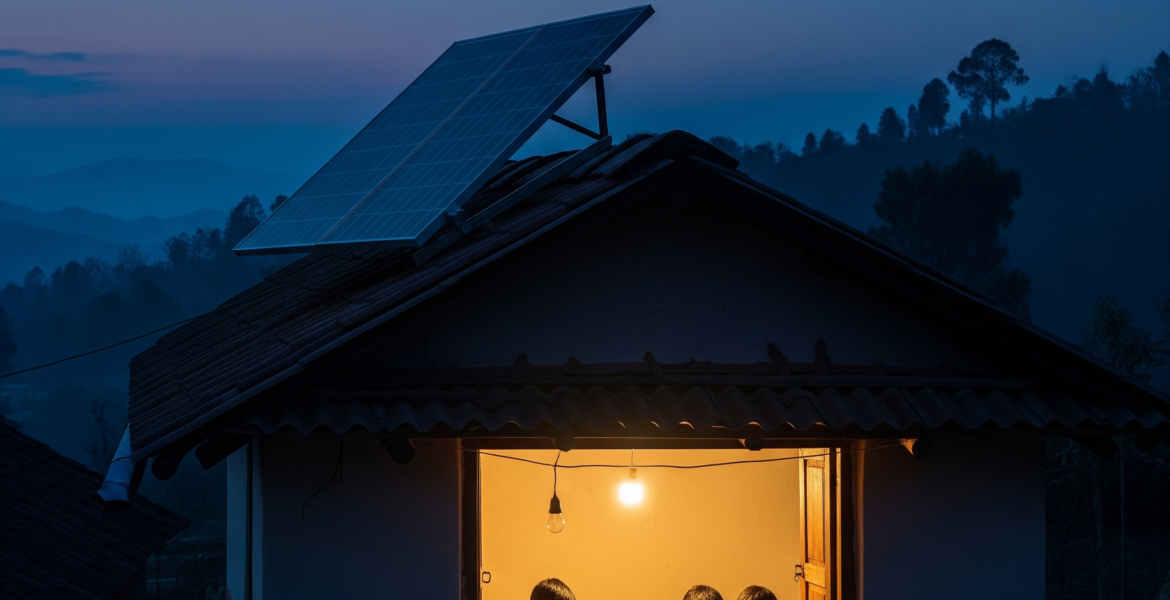
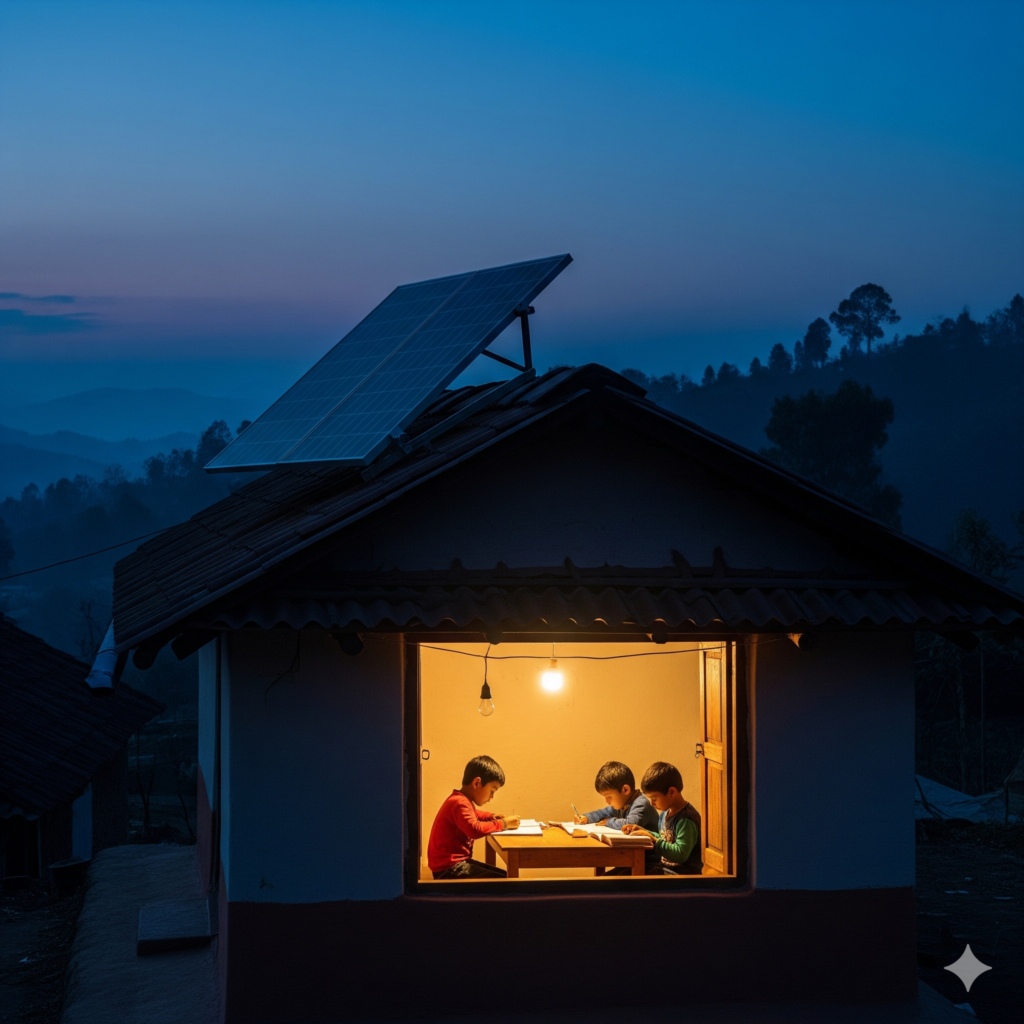
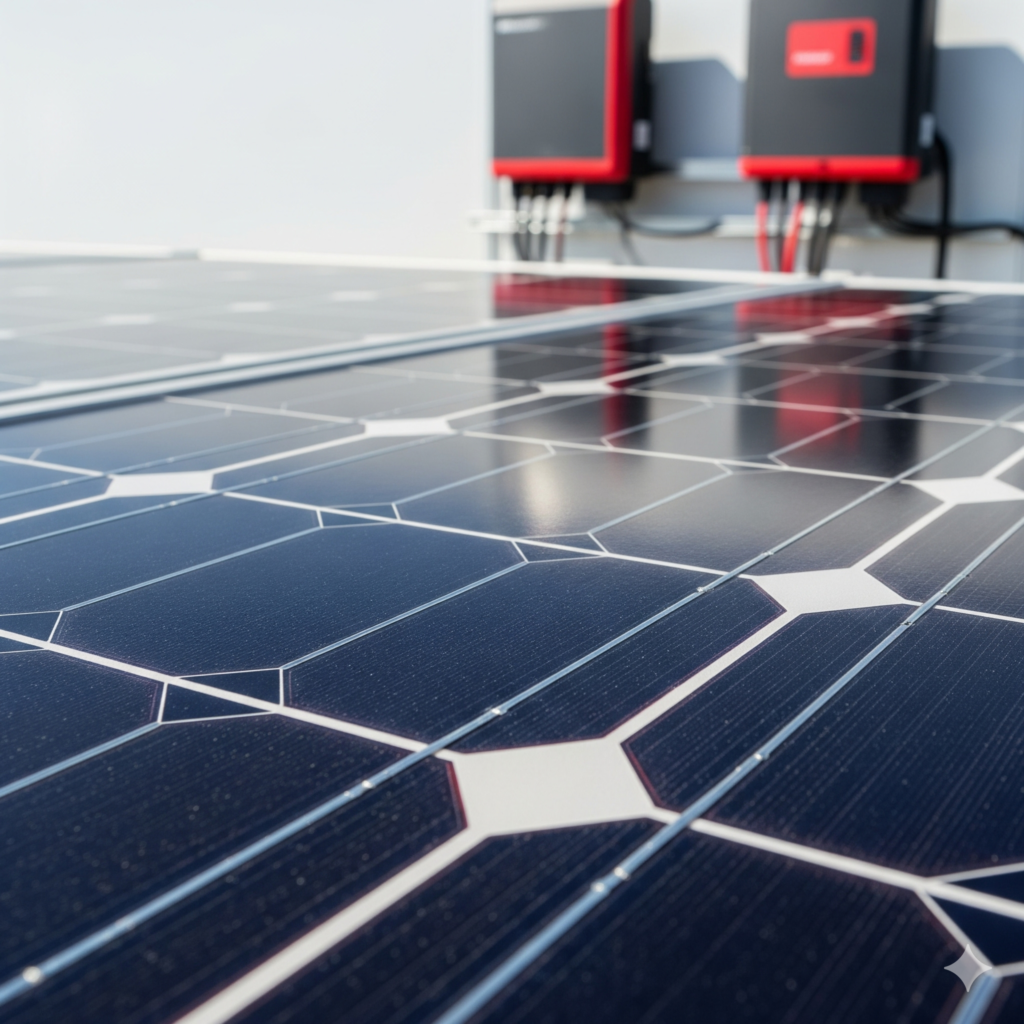
These are small, standalone units consisting of a solar panel (10W to 200W), a battery, and a charge controller.
- Function: They power LED lights, charge mobile phones, and perhaps run a small TV or fan.
- Impact: Replacing kerosene lamps reduces indoor air pollution (a major killer), eliminates the fire risk of kerosene, and saves the family money in the long run. It extends the day, allowing children to study and businesses to stay open after dark.
2. Minigrids (Microgrids)
For productive use—powering grain mills, welding shops, or healthcare clinics—you need more power than an SHS can provide. Minigrids are localized networks connecting a village to a central generation source (usually Solar PV + Battery + Diesel Backup).
- Smart Metering: Modern minigrids use smart meters and mobile money payments (like M-Pesa in Kenya), allowing users to pay only for what they consume (Pay-As-You-Go), drastically lowering the barrier to entry.
Financing the Unbanked: PAYGO
The biggest barrier to adoption is the high upfront cost. A rural farmer cannot afford $200 for a solar system upfront.
The Pay-As-You-Go (PAYGO) model has revolutionized this sector. The customer pays a small deposit and takes the solar unit home. They then make daily micropayments (often less than the cost of the kerosene they used to buy) via their mobile phone.
- Locking Technology: If they stop paying, the solar unit remotely locks itself via GSM signal until payment resumes. Once the system is paid off (usually in 12-18 months), they own it outright.
The “Energy Trilemma” in Emerging Markets
Policy makers in developing nations balance three competing goals:
- Energy Security: Having reliable power.
- Energy Equity: Ensuring power is affordable and accessible to all.
- Environmental Sustainability: Minimizing pollution.
Renewables are increasingly the only solution that satisfies all three. They utilize domestic resources (sun/wind) for security, are modular and scalable for equity, and are clean.
Case Study: The Solar Revolution in Kenya
Kenya is a global leader in geothermal and decentralized solar.
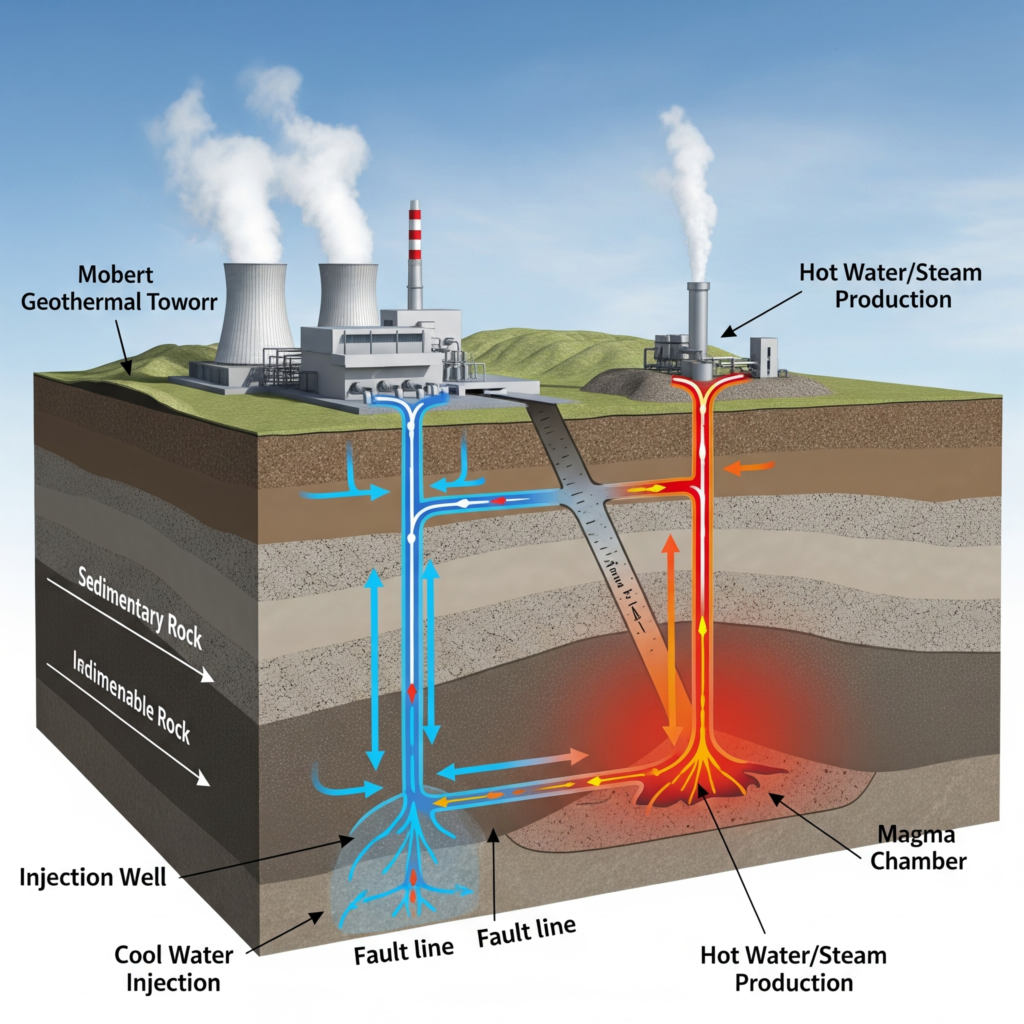
- Grid: Kenya generates nearly 50% of its grid power from geothermal energy in the Rift Valley.
- Off-Grid: It is the home of M-KOPA Solar, a company that has connected millions of homes to solar power using the PAYGO model. This ecosystem has created thousands of jobs in sales, installation, and maintenance.
Pitfalls and Challenges
- The “Dump” Risk: Without proper recycling infrastructure, the Global South risks becoming a graveyard for cheap, low-quality solar products and dead lead-acid batteries. E-waste management is a critical emerging crisis.
- Subsidies for Fossil Fuels: Many developing nations still heavily subsidize diesel and petrol to keep cost of living low. This artificially makes renewable alternatives look expensive, distorting the market.
- Grid Instability: In nations with weak central grids, adding variable renewable energy without upgrading infrastructure can cause blackouts.
Conclusion
In developing countries, renewable energy is a humanitarian tool. It empowers women, improves health outcomes, and drives economic activity in the most remote corners of the globe. By leapfrogging the centralized fossil-fuel model, the Global South has the potential to build a cleaner, more resilient energy system than the one the Global North is currently struggling to decarbonize.