Future Trends & Innovations
Renewable Energy



Introduction: Beyond the Horizon
We have spent the last 11 posts discussing the current state of the energy transition. We’ve covered the workhorses (Solar, Wind, Hydro), the enablers (Storage, Smart Grids), and the drivers (Policy, Economics).
But engineering never stands still. The technologies dominating today—silicon PV and lithium-ion batteries—are likely to be superseded or supplemented by new innovations by 2040. In this final chapter of our series, we look at the bleeding edge. These are the technologies currently in R&D labs and pilot plants that promise to solve the “hard-to-abate” sectors and take us from 80% renewable to 100%.
Green Hydrogen: The “Champagne” of Energy
You cannot run a container ship or a steel foundry on batteries; they are simply too heavy. This is where Hydrogen comes in.
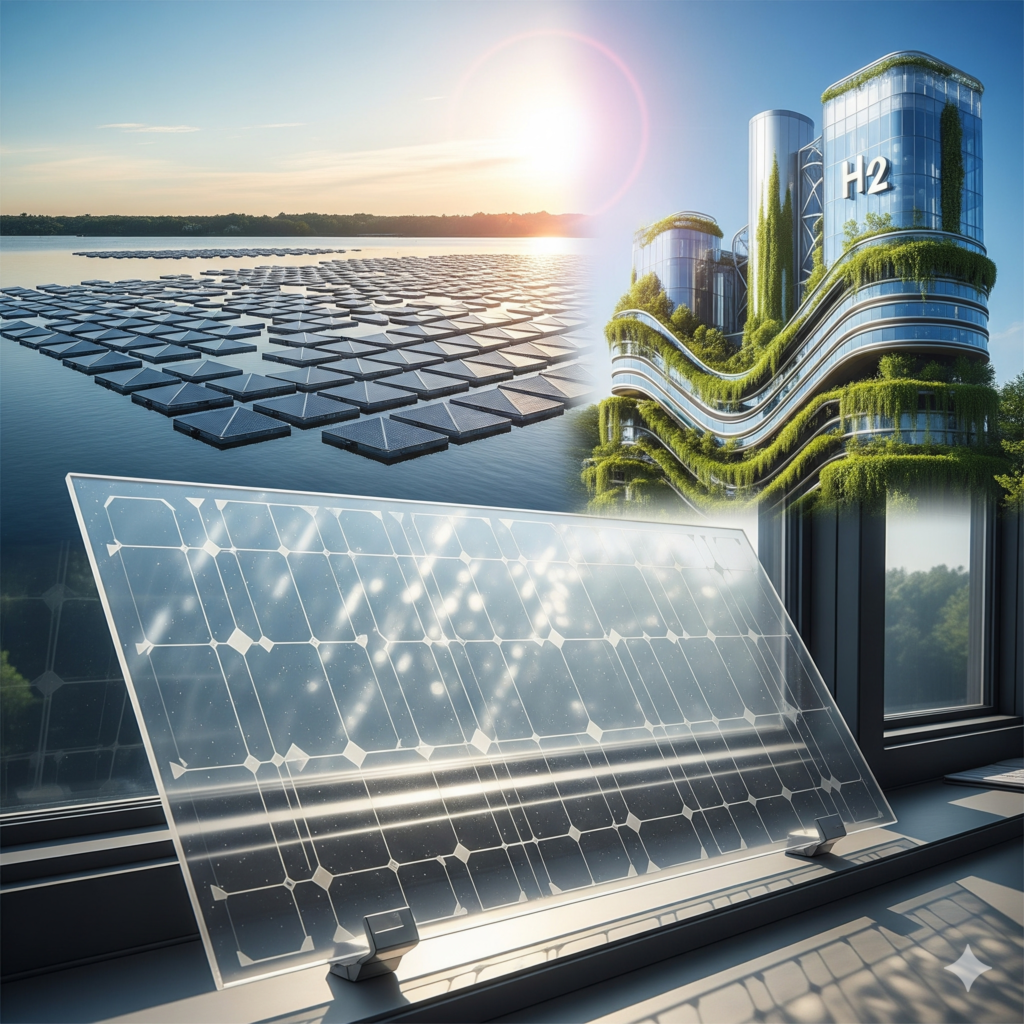
- The Colors of Hydrogen: Most hydrogen today is “Grey” (made from natural gas, emitting CO2). The goal is Green Hydrogen: made by using renewable electricity to split water (H2O) in an electrolyzer.
- The Promise: It is a dense, burnable, storable fuel with zero emissions. It can decarbonize heavy industry (steel, chemicals) and long-haul transport.
- The Challenge: It is currently expensive and inefficient (you lose energy making it, storing it, and burning it). It will likely remain a premium fuel for specific uses—hence the nickname “The Champagne of Energy.”
Floating Solar (Floatovoltaics)
Land is a finite resource. Why cover farm fields with panels when we have reservoirs, lakes, and oceans?
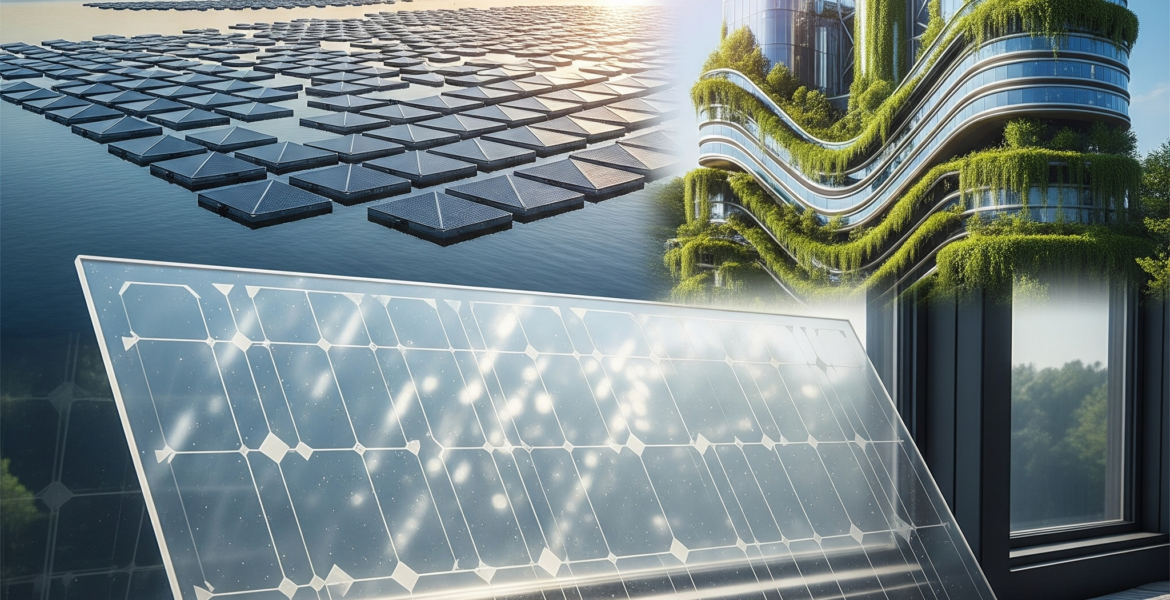
Floating PV (FPV) places solar panels on pontoons.
- Synergy: The water cools the panels, increasing their efficiency by up to 10% (remember the temperature coefficient from Post 2). In return, the panels shade the water, reducing evaporation—a massive benefit for hydro dams and drought-stricken regions.
- Offshore Solar: Engineers are now designing rugged systems that can survive ocean waves, potentially pairing them with offshore wind farms to share transmission infrastructure.
Next-Gen Solar: Perovskites and Paint
Silicon is great, but it’s rigid and heavy. Perovskites are a crystal structure that can be printed onto flexible rolls of plastic or even painted onto glass.
- Building Integrated PV (BIPV): Imagine every window in a skyscraper generating power. Imagine the roof of your electric car recharging the battery as you drive. Perovskites could make surfaces “active” energy generators without the weight of glass-encased silicon.
Artificial Photosynthesis
Plants have been turning sunlight into fuel for billions of years. Scientists are trying to mimic this.
Artificial Photosynthesis uses sunlight to convert CO2 and water directly into liquid fuels (like methanol) or complex chemicals. Instead of just electricity, this technology would produce the actual raw materials needed for plastics and fertilizers, closing the carbon loop entirely.
The Moonshot: Nuclear Fusion
While technically nuclear, Fusion is the ultimate clean energy dream. Unlike Fission (splitting atoms, creating radioactive waste), Fusion merges hydrogen atoms to create helium, releasing massive energy—the same process that powers the sun.
- Status: For decades, it was “30 years away.” But recent breakthroughs (like the net-energy gain at NIF in 2022) have moved it from physics theory to engineering challenge. If achieved at scale, it provides infinite, safe, carbon-free baseload power.
AI-Designed Materials
The speed of innovation itself is accelerating thanks to Artificial Intelligence. AI is now used to simulate millions of potential battery chemistries or solar materials in seconds, finding candidates that humans might take decades to discover. The next breakthrough in battery density will likely be discovered by an algorithm.
Series Conclusion: The Engineer’s Role
We hope you have enjoyed this 12-part journey through the world of Renewable Energy. The transition from fossil fuels to renewables is the largest engineering project in human history. It requires civil engineers to build the foundations, electrical engineers to balance the grid, chemical engineers to design better batteries, and software engineers to manage the data. The future is not just about saving the planet; it is about building a more efficient, resilient, and advanced civilization. The tools are in our hands. Now, let’s get to work.