Introduction:
The inherent risks associated with piping systems (contained energy, hazardous fluids). The moral, legal, and financial imperative for safety.
Common Hazards in Piping Systems:
- Leaks and ruptures (leading to toxic release, fire, explosion, environmental damage).
- Overpressure failures.
- Corrosion (internal and external).
- Erosion.
- Vibration-induced fatigue failures.
- Thermal expansion/contraction issues (overstressing, equipment nozzle damage).
- Human error in design, construction, operation, or maintenance.
Inherently Safer Design (ISD) Principles for Piping:
- Minimize: Use smaller quantities of hazardous substances, reduce inventory in piping.
- Substitute: Replace hazardous materials with less hazardous ones.
- Moderate: Use less hazardous conditions (lower pressure/temperature), design for lower stress levels.
- Simplify: Design less complex systems, reduce number of joints, avoid dead legs.
Key Design Considerations for Safety (with ASME references):
- Material Selection: Appropriate for fluid, pressure, temperature, corrosivity (ASME B31.3 Chapter III).
- Pressure Design: Ensuring pipe wall thickness, component ratings are adequate (ASME B31.3 Chapter II Part 2).
- Pressure Relief Systems: Design and specification of Pressure Relief Valves (PSVs), rupture disks as per ASME Section VIII (for vessel protection, principles apply to system protection) and API 520/521. Sizing, location, discharge piping design.
- Layout and Spacing: Accessibility for operation/maintenance, escape routes, separation from ignition sources, consideration of jet fire impingement.
- Support Design: Preventing excessive stresses, vibration, and ensuring stability (ASME B31.3 Para 321).
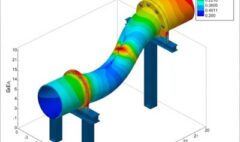
- Flexibility Analysis: Accommodating thermal movements to prevent overstress (ASME B31.3 Chapter II Part 5).
- Isolation and Draining: Provisions for safe maintenance (double block and bleed, spectacle blinds, drain points).
Operational Safety Procedures:
- Management of Change (MOC).
- Permit to Work systems.
- Lock-Out Tag-Out (LOTO).
- Regular inspection and testing (e.g., based on API 570 Piping Inspection Code).
- Emergency preparedness and response.
Role of HAZOP and LOPA:
Using systematic reviews to identify potential hazards and assess safety integrity levels.
Conclusion & Call to Action:
Safety is not an afterthought but integral to every stage of the piping lifecycle. Dedicated courses on process safety management (PSM), HAZOP leadership, and specific ASME code compliance (e.g., B31.3 safety aspects, pressure relief design) are essential for engineers to design, build, and operate safer piping systems.