Geothermal Energy
Renewable Energy
Introduction
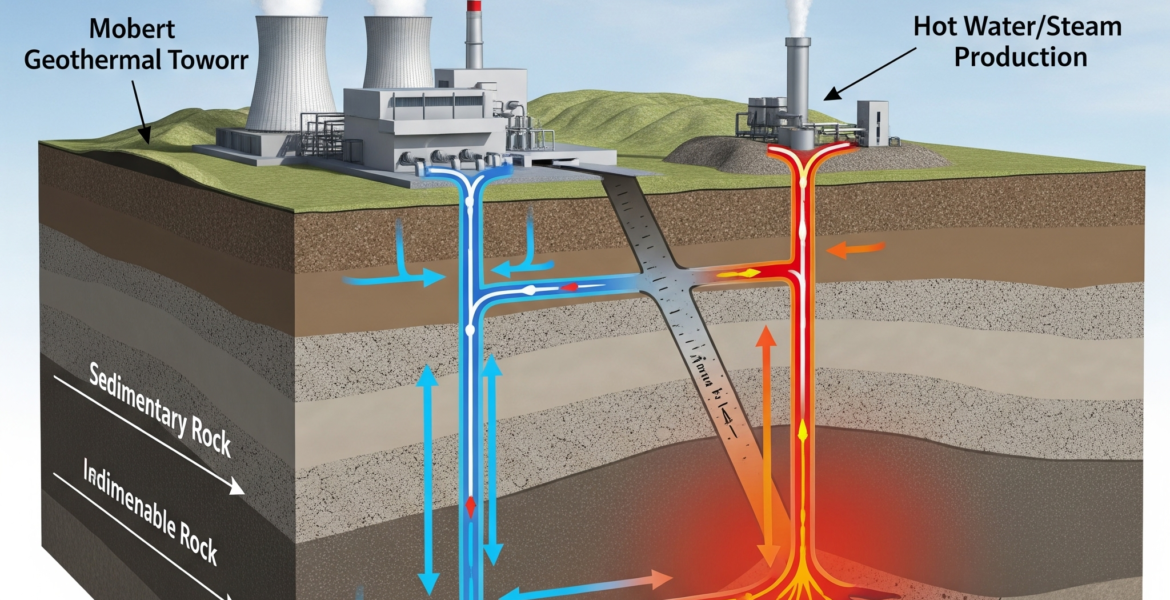
While wind and solar wait for the weather, Geothermal energy runs 24/7. It taps into the immense heat radiating from the Earth’s core. Historically limited to volcanic regions, new drilling technologies are opening geothermal potential worldwide.
Purpose: The Underground Powerhouse
Geothermal provides baseload renewable power with a tiny surface footprint compared to solar or wind farms. It is immune to weather and fuel price fluctuations.
How It Works: The Plant Types
- Dry Steam: Uses steam directly from the ground (rare, e.g., The Geysers, CA).
- Flash Steam: High-pressure hot water is pulled up; as pressure drops, it “flashes” into steam to drive a turbine.
- Binary Cycle: Used for lower temperature resources (100°C – 180°C). Hot water vaporizes a secondary fluid (like isobutane) with a lower boiling point to spin the turbine. This is a closed-loop system with zero emissions.
The Future: Enhanced Geothermal Systems (EGS)
Traditional geothermal needs three things naturally: Heat, Fluid, and Permeability (cracks in rock).
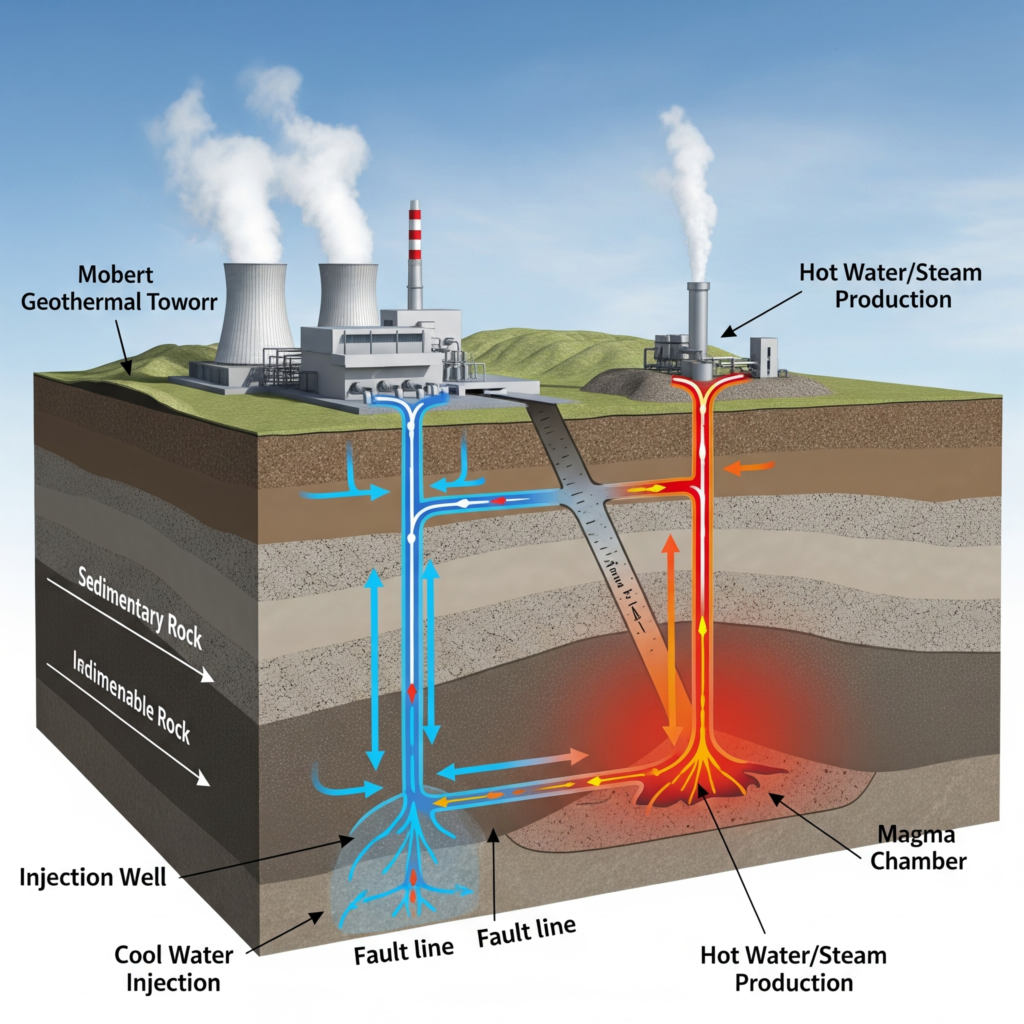
EGS creates the missing pieces. We drill deep into hot dry rock, inject water to fracture it (create permeability), and circulate it to harvest heat. This could theoretically power the entire planet.
Process Steps: The Drilling Risk
- Exploration: Geological surveys and test drilling. High upfront risk (drilling a “dry hole” costs millions).
- Well Field Development: Designing injection and production wells to maintain reservoir pressure.
- Plant Construction: Standard steam cycle engineering.
Pitfalls
- Induced Seismicity: Deep drilling and fracking for EGS can trigger small earthquakes if not carefully managed.
- Resource Depletion: If you draw heat faster than the earth replenishes it, the well cools down. Reinjection strategies are critical.
Example: Iceland’s Model
Iceland generates nearly 100% of its electricity from renewable sources, largely geothermal. They practice “cascading use”: High-temp steam makes electricity; the remaining hot water heats homes (district heating); and the final warm water heats greenhouses or swimming pools (Blue Lagoon). Efficiency at its finest.