Wind Energy Fundamentals
Renewable Energy
Introduction
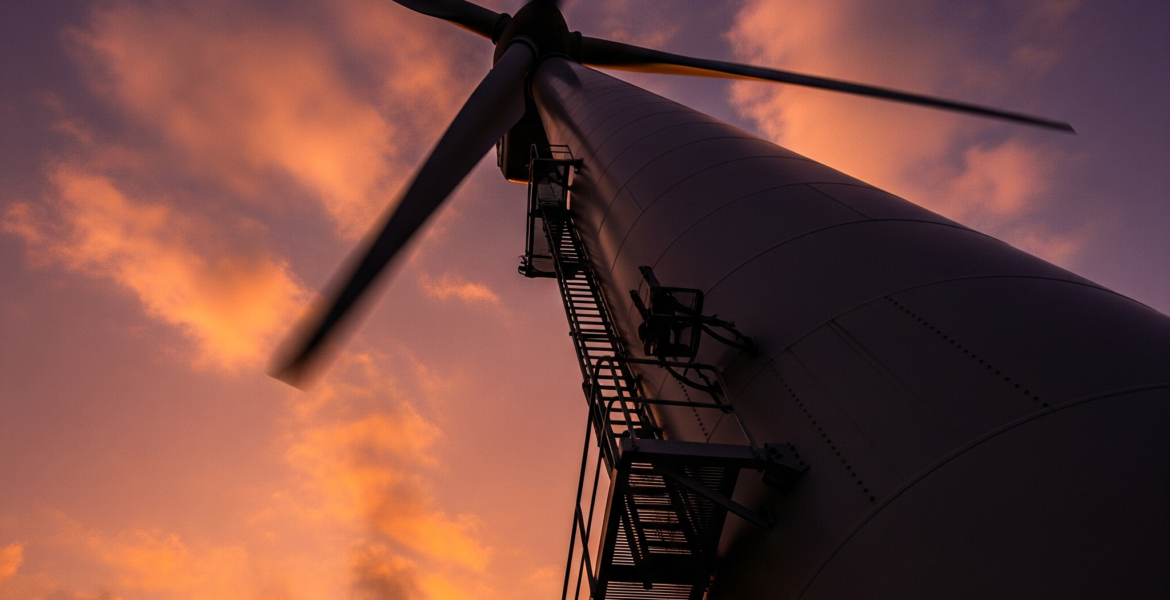
Wind energy is kinetic energy in motion. It is one of the oldest forms of power generation, yet modern wind turbines are marvels of aerospace engineering. This post explores how we harvest the wind, the physics that limit us, and the engineering challenges of moving offshore.
The Physics: Capturing Kinetic Energy
The power available in the wind is proportional to the cube of the wind speed. This means doubling the wind speed gives you eight times the power.
- The Betz Limit: Theoretically, no turbine can capture more than 59.3% of the kinetic energy in the wind. Modern turbines reach about 45-50%, pushing the boundaries of physics.
Inputs: Turbine Components
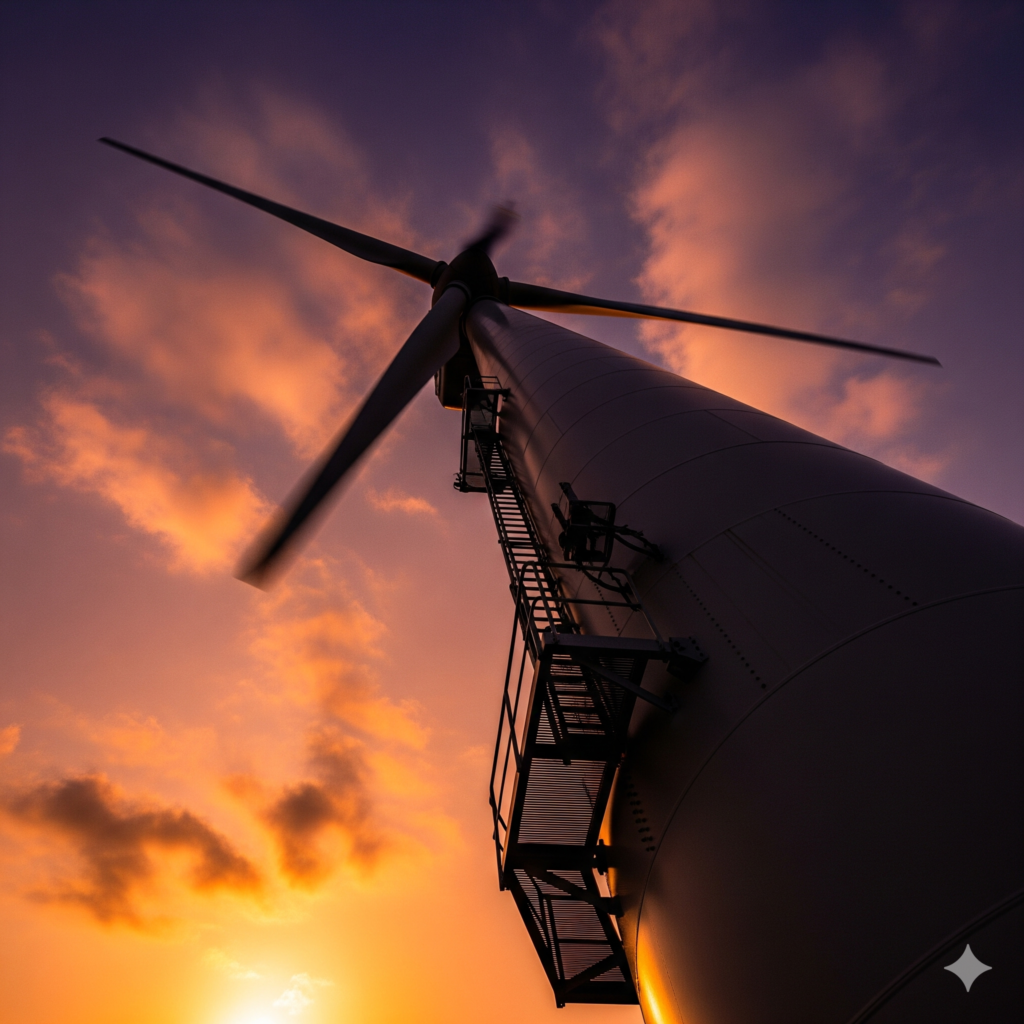
- The Rotor: The blades act like airplane wings, generating lift to rotate the hub.
- The Nacelle: The housing atop the tower containing the gearbox (or direct drive generator) and electronics.
- Yaw System: Motors that rotate the nacelle to face the wind directly.
- Pitch System: Mechanisms that angle the blades to control speed and “feather” them during dangerous storms to prevent damage.
Onshore vs. Offshore
- Onshore: Mature, cheaper to install, but limited by land availability and noise regulations.
- Offshore: Massive potential due to stronger, more consistent winds. However, the engineering challenge of building foundations in corrosive saltwater environments is immense.
Process Steps: Siting a Wind Farm
- Wind Resource Assessment: Installing LiDAR or Met Masts to measure wind speed/direction for at least 12 months.
- Micrositing: Placing turbines to minimize “wake effect” (turbulence from one turbine reducing the output of the one behind it).
- Logistics: Transporting 100-meter blades requires specialized trailers and road modifications.
Pitfalls: The Grid Challenge
Wind is variable. Connecting huge amounts of fluctuating power to the grid requires robust “Grid Codes” (requirements for frequency and voltage support) so the turbines don’t destabilize the network.
Example: The Offshore Giant
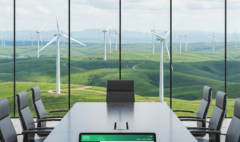
The “Haliade-X” turbine stands 260 meters tall—nearly the height of the Eiffel Tower. A single rotation can power a UK household for two days. This scale reduces the LCOE by generating more power per foundation installed.