From Sulfur to Sulfuric Acid: The Engineering Behind Fertilizer and Chemical Manufacturing

From Sulfur to Sulfuric Acid: The Engineering Behind Fertilizer and Chemical Manufacturing
Industrial Powerhouse: Sulfur in Modern Applications



3.0 Introduction: The World’s Most-Produced Industrial Chemical
If you had to name the single chemical compound produced in the greatest volume worldwide, sulfuric acid would be the correct answer — global output runs well over 200 million tonnes annually, more than any other manufactured chemical. It rarely makes headlines, because almost none of it reaches consumers directly. Instead, sulfuric acid functions as an industrial workhorse, feeding into fertilizer, metals processing, and chemical manufacturing supply chains that most people never see.
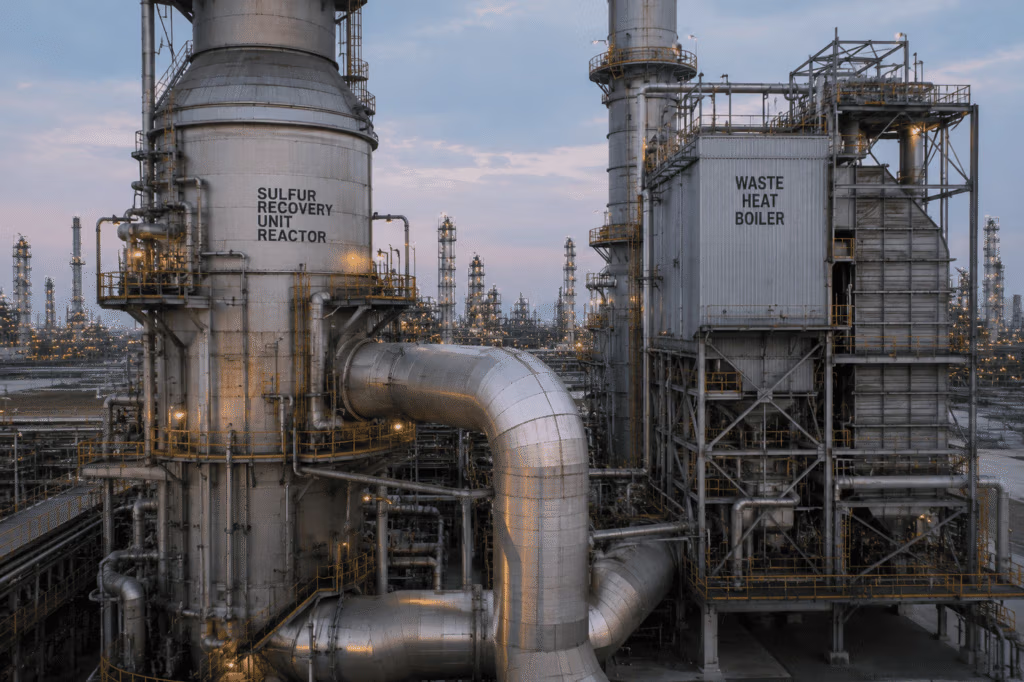
The journey from elemental sulfur — the product recovered in the sulfur recovery units covered in Post 2 of this series — to finished sulfuric acid runs through a deceptively simple-looking process called the Contact Process. Like the Claus process before it, the Contact Process hides considerable engineering complexity behind a short reaction sequence: extreme exothermic chemistry, demanding materials selection, and pressure equipment that must survive decades of corrosive, high-temperature service. This post examines how that conversion happens and what it demands from the engineers who design and maintain acid plants.
3.1 The Contact Process: Converting Sulfur to Sulfuric Acid
3.1.1 SO2 to SO3 Conversion
Sulfuric acid production begins by burning molten sulfur in dry air to form sulfur dioxide, then passing that SO2 over a vanadium pentoxide catalyst to oxidize it further into sulfur trioxide (SO3). This conversion step is highly exothermic and equilibrium-limited, which means plant designers stage the reaction across multiple catalyst beds with intercooling between stages to push conversion efficiency above 99.5% while managing the substantial heat release.
3.1.2 Absorption and Acid Concentration Stages
SO3 gas is not absorbed directly into water, because doing so creates a fine sulfuric acid mist that is extremely difficult to capture. Instead, the gas is absorbed into concentrated sulfuric acid itself, within a packed absorption tower, producing additional acid that is diluted to the desired final concentration. Modern double-absorption plants route gas through two absorption stages with an intermediate catalyst pass, which both improves overall conversion efficiency and reduces SO2 emissions to atmosphere.
3.2 Industrial Demand Drivers
3.2.1 Fertilizer Production via the Phosphoric Acid Route
The single largest consumer of sulfuric acid is fertilizer manufacturing, where it reacts with phosphate rock to produce phosphoric acid — the precursor to most phosphate fertilizers used in global agriculture. This single application chain accounts for roughly half of worldwide sulfuric acid demand, which means agricultural commodity cycles have a direct, measurable effect on sulfur and sulfuric acid markets.
3.2.2 Metal Processing, Batteries, and Chemical Synthesis
Beyond fertilizer, sulfuric acid plays an essential role in metal ore leaching (particularly copper extraction), lead-acid battery electrolyte, and as a feedstock or catalyst across a wide range of chemical synthesis processes, including detergents, dyes, and pharmaceuticals. This diversified demand base gives sulfuric acid producers somewhat more market stability than a single-application chemical would have.
3.3 Equipment and Materials Engineering for Acid Plants
3.3.1 Pressure Vessel Design for High-Temperature, Corrosive Service
The sulfur furnace and converter vessels in a Contact Process plant operate at high temperatures while handling acidic, corrosive gas streams, demanding careful vessel design under recognized pressure vessel codes along with attention to refractory lining performance and thermal cycling resilience. Converter internals, which support and distribute gas flow across catalyst beds, see particularly aggressive combined thermal and chemical attack over a plant’s operating life.
3.3.2 Piping Material Selection
Concentrated sulfuric acid is, somewhat counterintuitively, less corrosive to carbon steel than dilute acid because a passivating iron sulfate film forms on the pipe wall — but that protection disappears quickly if velocity, temperature, or concentration shifts outside a narrow operating window. Dilute acid service, by contrast, typically requires high-alloy stainless steels or non-metallic linings, making material selection a critical, condition-specific decision rather than a one-size-fits-all specification across the plant.
3.3.3 Heat Recovery and Energy Efficiency in Acid Plants
Because the SO2-to-SO3 conversion and absorption reactions release substantial heat, well-designed acid plants recover much of this energy as high-pressure steam, in some cases making the acid plant a net energy exporter to the rest of the facility. Heat recovery equipment in this service must be designed with the same corrosion awareness as the rest of the plant, since heat exchanger surfaces are among the most failure-prone components in acid plant operating histories.
3.4 Safety, Environmental, and Code Compliance
3.4.1 Relevant Code Considerations
Acid plant pressure equipment design typically draws on ASME Boiler and Pressure Vessel Code requirements for vessels, alongside ASME B31.3 for the associated process piping systems, with material selection further informed by ASTM specifications for corrosion-resistant alloys used in acid service.
3.4.2 Environmental Controls and Emissions
Modern acid plants face strict SO2 emissions limits, which is precisely why double-absorption designs have become the industry standard over older single-absorption configurations — the additional absorption stage typically reduces stack emissions by an order of magnitude. Acid mist control, often through high-efficiency mist eliminators, is an additional environmental and worker-safety requirement most jurisdictions now mandate.
3.5 Conclusion
Sulfuric acid manufacturing turns the sulfur recovered in Post 2 of this series into the chemical that quietly underwrites global fertilizer and metals supply chains. Behind that transformation sits a demanding set of pressure equipment, materials selection, and corrosion-management decisions — proof that even the world’s highest-volume industrial chemical depends on careful, code-driven mechanical engineering to produce safely and reliably.
Looking to strengthen your team’s pressure equipment and materials engineering capability for corrosive, high-temperature service? Our ASME BPV Code, Section VIII, Division 1: Design & Fabrication of Pressure Vessels course and Materials and Design for High Temperatures course build exactly these skills.
Recommended Training Courses
- ASME BPV Code, Section VIII, Division 1: Design & Fabrication of Pressure Vessels
- Materials and Design for High Temperatures
External References
- ASME — American Society of Mechanical Engineers
- ASTM — American Society for Testing and Materials International
3.6 FAQ
Q1: Why is sulfuric acid the most-produced industrial chemical in the world?
Its central role in phosphate fertilizer production, combined with broad use across metals processing, batteries, and chemical synthesis, drives consistently high global demand.
Q2: Why isn’t SO3 absorbed directly into water?
Direct absorption into water creates a fine, hard-to-capture sulfuric acid mist, so SO3 is instead absorbed into concentrated sulfuric acid itself within a packed tower.
Q3: Why does concentrated sulfuric acid sometimes corrode carbon steel less than dilute acid?
Concentrated acid promotes a passivating iron sulfate film on carbon steel surfaces, while dilute acid disrupts that film and accelerates corrosion.
Q4: What is a double-absorption acid plant?
It’s a plant design that routes process gas through two absorption stages with an intermediate catalytic pass, improving conversion efficiency and significantly reducing SO2 emissions versus single-absorption designs.
Q5: What codes typically govern sulfuric acid plant equipment design?
Pressure vessels generally fall under the ASME Boiler and Pressure Vessel Code, piping under ASME B31.3, with ASTM specifications guiding corrosion-resistant material selection.